Recognizing Excessive Humidity: The Most Important Warning Signs in a Building
A damp indoor environment is harmful not only to the building structure but also to your health. The problem is that high humidity often goes unnoticed for a long time, until the first signs of mold appear. But the building sends out warning signals much earlier.
In this guide, we’ll show you how to immediately detect high humidity with or without measuring devices and what steps you need to take right away.

High humidity often goes unnoticed until it is already too late. Keeping an eye on moisture levels is the first and most important step in preventing structural damage and actively improving your quality of living.
Humidity levels in a building are considered too high when there are persistently elevated humidity readings that significantly increase the risk of mold growth and structural damage. Expert sources generally recommend a relative humidity between 40 % and 60 % for indoor spaces, as this range is considered optimal for health and the building. (RWTH Aachen)
If the humidity rises above this range, moisture can condense on surfaces. Even at around 60 % relative humidity in the indoor air, a critical zone can form on colder building components that promotes mold growth. (bau-sv.de)
The 5 Most Obvious Warning Signs of Excessive Humidity
Indoor relative humidity has a significant impact on the indoor climate and healthy living conditions. If the humidity level rises above a critical threshold, the air reaches its saturation point and tends to condense at thermal weak points such as window sills or exterior walls. To identify moisture problems in a building early on and proactively eliminate the conditions that allow mold to grow, you should pay attention to these five key indicators:
The phenomenon: In the morning, thick drops of water form on the window panes (usually along the lower edge) or the corners of exterior walls feel damp to the touch.
Why does this happen? Warm indoor air cools down against the cold window panes. Since cold air can hold less moisture, the water "condenses" out.
If you enter a room (especially after being away for a longer period) and it constantly smells "like a basement" or stale, this is a clear indication that the humidity is consistently above healthy levels.
Code Red: Small black or gray dots on wallpaper, in tile grout, behind closets, or on the ceiling. Mold only requires a relative humidity of over 70–80% on the wall surface to start growing.
Upholstered furniture, bedding, or towels constantly feel slightly damp. Wallpaper peeling at the corners or wavy paper on shelves are also typical signs.
Residents increasingly complain about stuffy noses, burning eyes, headaches, or poor sleep. A climate that is too humid also promotes the reproduction of dust mites.
Why is high humidity a problem?
High humidity is one of the most significant risk factors for damage to buildings and health problems. The World Health Organization (WHO) emphasizes that moisture is a key prerequisite for microbial growth, such as mold. (who.int)
In damp indoor spaces, bacteria and other microorganisms can multiply alongside mold. According to the German Federal Environment Agency, moisture and mold problems are among the most common causes of poor indoor air quality. (umweltbundesamt.de)
Furthermore, studies show that elevated humidity:
- can contribute to respiratory diseases and allergies
- damages building structures
- can intensify odors and pollutant levels
The WHO makes it clear that damp indoor environments are associated with a higher incidence of respiratory diseases, asthma, and allergies. (who.int)
Checklist: Is Your Humidity Too High?
Use this short checklist for an initial assessment of your building. The more questions you answer “Yes” to, the more urgent the need for action:
Humidity Check
You currently show no typical signs of excessive humidity. Keep up your current ventilation habits.
There are occasional moisture issues in your rooms. Pay closer attention to regular purge ventilation (3-4 times a day) and keep the rooms heated evenly.
Warning: The humidity in your building is permanently too high. There is a high risk of mold growth and structural damage. Manual ventilation is often no longer sufficient here. An automatic, moisture-controlled residential ventilation system offers the most reliable and permanent solution.
How to Measure Humidity Correctly
Recognizing the symptoms is the first step. However, to determine the exact conditions, you should measure the humidity.
The Reliable Way: The Hygrometer
A digital hygrometer displays the relative humidity as a percentage (%).
Tip for measuring: Place the hygrometer in the middle of the room at table height. Do not measure directly next to a window, above a radiator, or against a cold exterior wall, as this will distort the readings.
The Makeshift Solution: The Ice Cube Test
Without a measuring deviceDon't have a hygrometer at hand? With this simple physics trick, you can find out in just a few minutes whether your indoor air is too humid:
-
1
Fill a glass with cold water and a few ice cubes.
-
2
Place it in the room (important: not directly next to a window or a radiator).
It is not only the measured value that is crucial, but also how it relates to temperature and surface conditions.
- 40–60 % → optimal range
- over 60 % → increased risk
- 70 % or higher on surfaces → acute risk of mold (bau-sv.de)
Technical standards such as ISO 13788 evaluate precisely these relationships and show that critical surface moisture is directly linked to the risk of condensation and mold growth. (iso.org)
Where Does Humidity Come From?
It’s a myth that high humidity always comes from outside. Often, the causes of high humidity are found indoors. Most of the time, it’s created by the occupants themselves in their daily lives. In modern, highly insulated buildings (with airtight windows), this moisture can no longer escape naturally to the outside without active assistance.
| Activity | Moisture Release (approx. per hour/event) |
|---|---|
| Sleeping (1 person) | approx. 40 – 50 g / hour |
| Showering / Bathing | approx. 500 – 1,000 g / event |
| Cooking | approx. 400 – 900 g / event |
| Drying laundry (1 load) | approx. 1,000 – 1,500 g |
| Houseplants | approx. 10 – 30 g / hour |
Immediate Action: What Can You Do Now?
A positive result from a moisture check is a clear signal to take action. Persistently damp air not only endangers the structural integrity of your building over time, but also compromises indoor air quality and your well-being. To immediately counteract acute spikes in humidity and actively prevent mold growth, a targeted combination of ventilation, heating, and humidity control is necessary. The following three pillars form the ideal foundation for this:
Correct Purge Ventilation
Open windows completely 3 to 4 times a day for 5 to 10 minutes (ideally creating a cross-breeze). Leaving windows tilted is ineffective in winter and only cools down the walls.
Correct Heating
Keep the room temperature constant at a minimum of 19 to 21 °C. Warm air can absorb significantly more moisture than cold air.
Minimize Moisture Sources
If possible, do not dry laundry inside the apartment. Always use the extractor hood (exhaust air) when cooking, and wipe water off the tiles after showering.
The Long-Term Solution: Automatic Residential Ventilation
Manual intermittent ventilation is often difficult to implement consistently in everyday life, especially for working professionals. The most sustainable method for permanently preventing mold and ensuring a healthy, comfortable indoor climate is controlled residential ventilation.
Modern ventilation systems (such as the decentralized ventilators from LUNOS) operate based on humidity levels: They automatically measure the humidity and expel moist air to the outside exactly when it’s needed—fully automatically, quietly, and, thanks to heat recovery, extremely energy-efficiently.
True all-around solutions for moisture control
In everyday life, a great deal of moisture builds up unnoticed in every household, which—without proper air circulation—can quickly lead to costly mold damage.
This is exactly where LUNOS’s intelligent ventilation systems come into play: Using state-of-the-art sensor technology, they monitor indoor air quality around the clock and automatically adjust their performance to current conditions.
e²60
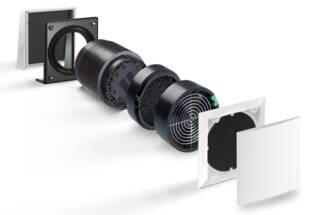
Decentralized ventilation unit with heat recovery: Ideal for living rooms and bedrooms, as well as for renovation and new construction projects.
ego
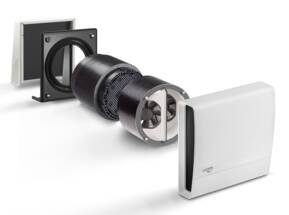
Compact ventilation unit for single rooms: Particularly suitable for bathrooms, guest toilets, kitchens, and small apartments.
Silvento ec
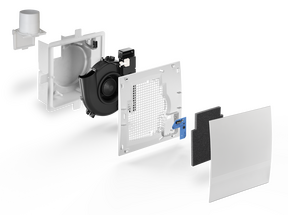
Innovative exhaust fan for bathrooms, toilets, kitchens, storage or utility rooms: extensively upgradable with sensor modules.

Your Path to a Healthy Home
Effectively protect your building structure and your health from the consequences of excessive humidity. Our experts will be happy to advise you on automatic, moisture-controlled ventilation solutions for your property or connect you with a qualified local specialist technician.
Frequently Asked Questions About Humidity
Indoor air is considered too humid starting at around 60% relative humidity. It becomes particularly critical when condensation forms on windows or walls – this indicates an increased risk of mold.
Typical signs include fogged-up windows, damp walls, a musty odor, or visible mold stains. Constantly high readings above 60–70% are also a clear warning signal.
The ideal humidity in living spaces ranges between 40% and 60%. This range ensures a comfortable indoor climate and reduces the risk of moisture damage.
Relative humidity can be easily measured using a hygrometer. Digital devices usually provide more precise values and help you keep a permanent eye on the indoor climate.
New buildings contain a lot of residual moisture from construction materials such as concrete or screed. This moisture is released into the indoor air over several months and can significantly increase humidity levels.
Showering, cooking, drying laundry, or even breathing release several liters of moisture into the indoor air every day. Without sufficient ventilation, humidity levels rise rapidly.
Yes. Condensation is a clear indication of excessive humidity and can lead to mold growth and long-term structural damage to building components.
Regular purge ventilation is crucial. Additionally, ventilation systems help to permanently regulate moisture levels and ensure a healthy indoor climate.
Sources and Further Information
- DIN EN 16798-1 (Building Standards Lexicon)
- Guidelines for the Prevention, Detection, and Remediation of Mold Infestation in Buildings (Federal Environment Agency)
- WHO Guidelines on Indoor Air Quality: Humidity and Mold: Summary
- The Impact of Humidity on People and Their Health (RWTH Aachen)
- Indoor environment: mold and dampness (European Environment Agency, EEA)
- 5 Warning Signs of High Humidity
- Take the Quick Check!
- How to Measure Humidity
- Where Does Humidity Come From?
- Immediate Action
- The Permanent Solution
- All-Rounders Against Moisture
- Service & Help
- Frequently Asked Questions (FAQ)
Please contact us at:
Tel.: +49 30 362 001-0
E-Mail: info@lunos.de
