Noise protection in ventilation: decibels, standards and quiet ventilation systems explained

Effective noise protection ensures a high quality of life in living spaces. Learn here how the sound insulation of building components is measured, why the location of ventilation units is crucial, and how the human ear perceives sound levels.
What is the standard sound level difference?
The standard sound level difference (Dn,e,w) is a key measure for evaluating the sound insulation of exterior building components. It is particularly important in building sound insulation and in decentralized ventilation systems. It is expressed in decibels [dB].
It describes how effectively a building component—such as a window, an exterior wall, or a ventilation unit—prevents external noise from entering the interior. The rule of thumb is:
High sound insulation is essential, especially in noisy environments such as along busy roads, in city centers, or near railroad tracks.
How the human ear perceives decibels (dB) and volume
The relationship between physically measured sound and human perception is not linear, but logarithmic. The following guidelines help to realistically assess the effectiveness of soundproofing measures:
| Change in Sound Level | Physical effects | Human perception |
|---|---|---|
| +3 dB / -3 dB |
Doubling / Halving of sound energy |
Barely perceptible difference |
| +5 dB / -5 dB | Significant change in energy | Noticeable change in volume |
| +10 dB / -10 dB | Tenfold increase / tenfold decrease in sound energy | Perceived doubling / halving of volume |
LUNOS Acoustic & Fresh Air Simulator
Use the sliders to simulate your living situation and a ventilation solution.
It is unbearably loud! The noise comes in almost unfiltered through the open window. It is impossible to get a good night sleep.
Sound sources inside the room: internal noise vs. external noise
When assessing background noise in living spaces, two factors must be distinguished:
Noise that penetrates from outside through walls and ventilation openings. This noise is effectively attenuated by the standard sound level difference of the building component.
The noise generated by the ventilation unit itself due to the operation of its built-in fan (specified as sound power level).
In practice, it is often difficult to distinguish between these two sources without specific comparative measurements. In addition, professional measuring devices also detect frequency ranges that are inaudible to the human ear, which can lead to differing measurement results in everyday use. LUNOS ventilation units are therefore optimized for both minimal self-generated noise and maximum external sound insulation.
The right installation location: Room acoustics and ventilation unit placement
The location of a ventilation unit in a room has a significant impact on the perceived noise level. This is due to sound reflections off walls, ceilings, and floors.
The effect of room size and furnishings
Interior design also affects how sound is perceived:
- Hard-surfaced rooms: In small, tiled rooms (e.g., bathrooms), sound is barely absorbed. As a result, a sound source seems significantly louder.
- Sound-absorbing rooms: In large living spaces with carpets, curtains, and upholstered furniture, sound is absorbed. This creates a more pleasant, muffled background noise.
Whisper-quiet fresh air: LUNOS noise protection technology
LUNOS's decentralized ventilation systems are specifically designed to combine maximum airflow with minimal noise. In doing so, we address both acoustic challenges simultaneously: protection against outside noise and the reduction of internal noise.
How LUNOS ensures excellent sound insulation:
- Highly efficient soundproofing mats: By using innovative, airflow-optimized sound-absorbing materials inside the ventilation ducts, LUNOS units achieve top ratings for standard sound level difference. Street noise stays outside.
- Whisper-quiet motors & Eco-fans: Our EC fans are mounted on sound-isolated bearings. They generate minimal inherent noise (sound power level), which falls below the threshold of perception during normal residential use (e.g., in a bedroom).
- Special soundproofing hoods and external hoods: For extremely noisy environments, we offer custom accessories such as optimized external hoods that break up the sound and further increase sound insulation by significant decibels.
- Intelligent flow mechanics: The air is guided through the unit in such a way that no disruptive flow noises or turbulence occur - even at higher ventilation levels.
A selection of our soundproof fans for your project
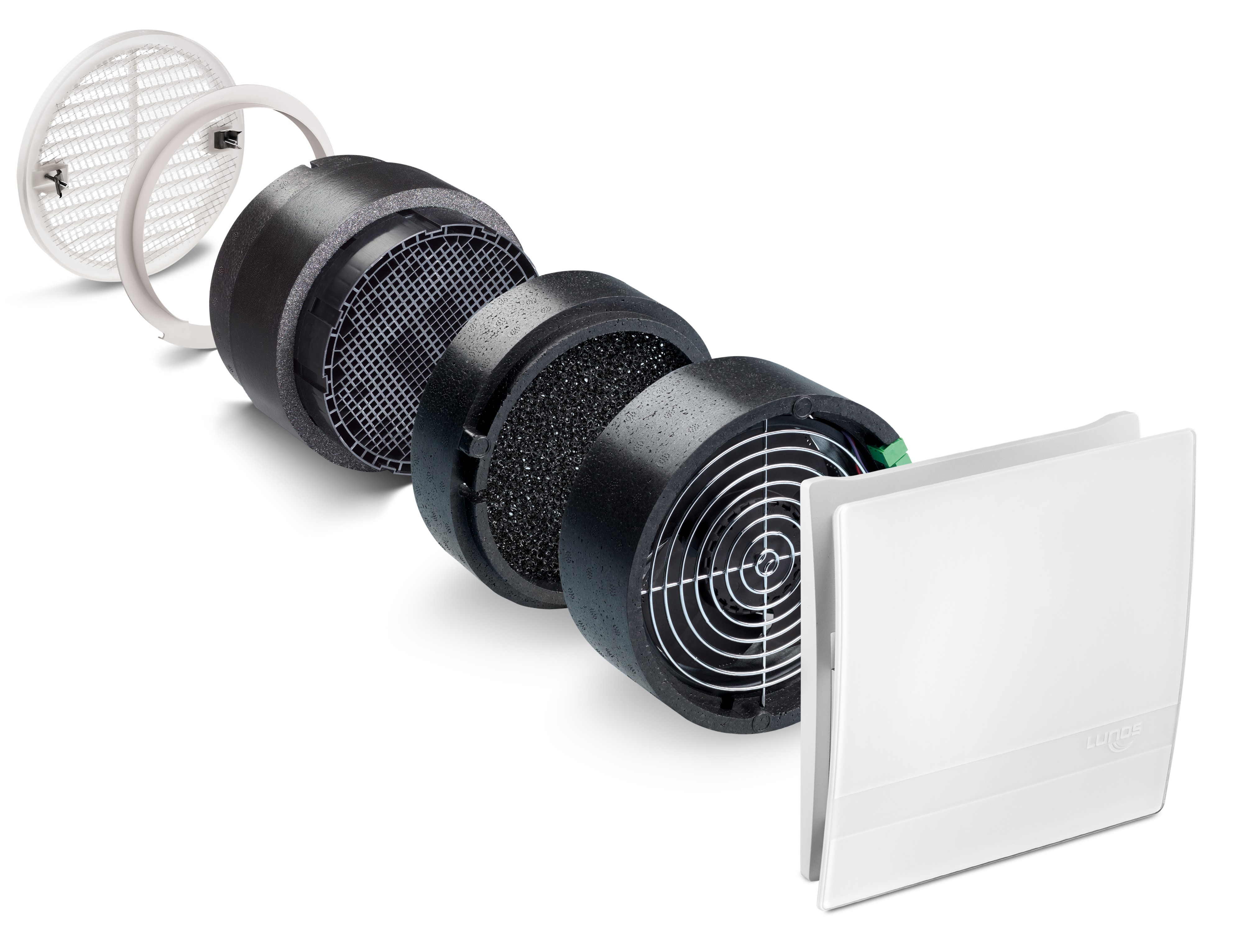
Heat recovery device.
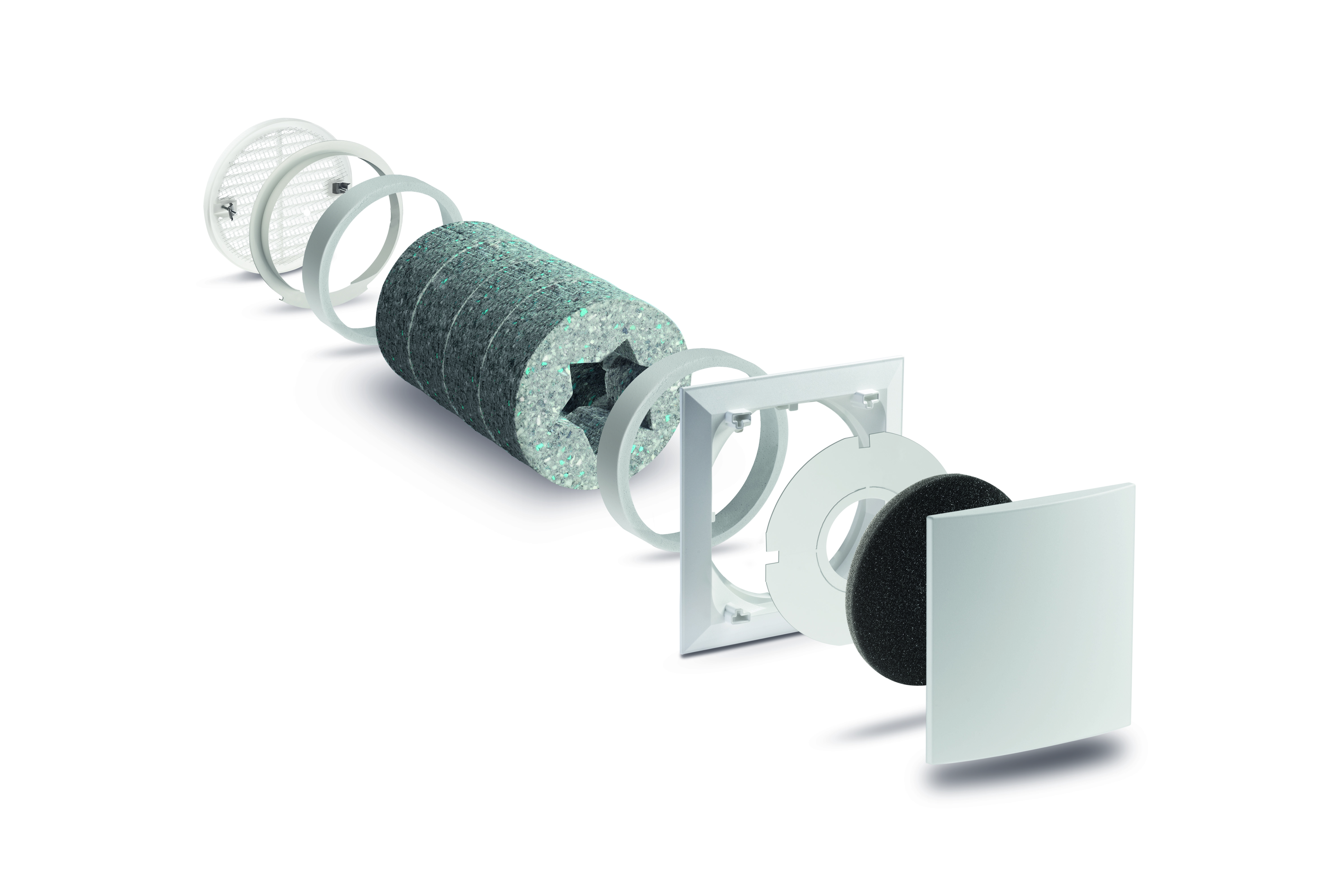
Supply air element

Facade element with sound insulation.
Your guide to whisper-quiet fresh air
Effectively protect your living space from outside noise without sacrificing fresh air. Our experts will be happy to advise you on the best soundproofing solutions for your property or connect you with a qualified local contractor.
Frequently asked questions about noise protection and ventilation
Sound insulation in decentralized ventilation systems is based on the principles of absorption and deflection. Inside the ventilation duct in the exterior wall are highly efficient, flow-optimized sound-absorbing mats. These sound-absorbing materials absorb the energy of incoming sound waves (e.g., from street noise or aircraft noise). In addition, special soundproofing outer hoods block and diffuse the sound before it even enters the unit. Thanks to this multi-stage design, fresh air flows through unimpeded, while sound is effectively kept out.
These two technical parameters describe two completely different sound sources and must not be confused: The standard sound level difference (denoted as D_n,e,w in decibels) describes the protection against external noise. The higher this value is, the better the ventilation unit blocks out external noise. The sound power level (denoted as L_w in decibels) describes the unit’s own noise. This value measures the operating noise generated by the fan inside the unit itself. The lower this value is, the quieter the ventilation system operates in the living space.
DIN 4109 governs “Sound Insulation in Building Construction” and establishes mandatory minimum requirements to protect people in living and sleeping areas from unreasonable noise. When exterior wall ventilators are installed, they must be sufficiently insulated so as not to compromise the overall sound insulation level of the exterior wall. In noise-polluted areas (e.g., along major thoroughfares), DIN 4109 often requires enhanced sound insulation. Modern LUNOS ventilation units, equipped with special sound insulation accessories, achieve peak values of over 50 dB standard sound level difference and easily meet these strict legal requirements.
High-quality decentralized ventilation units use modern, sound-insulated EC motors and so-called eco-fans. In what is known as basic ventilation or night mode, these fans run at a low, extremely efficient speed. The inherent noise generated in this process drops to levels below 15 dB(A). For comparison: A quiet whisper is around 30 dB. The operating noise is thus below the threshold of human perception in everyday life, enabling continuous moisture protection and fresh air supply for absolutely healthy and restful sleep.
The location of the unit within the wall has a significant impact on how loud the ventilation system sounds. If a unit is installed too close to a corner of the room or a window reveal, the so-called “corner effect” of room acoustics occurs. The adjacent walls act like a funnel and reflect the sound back into the room with increased intensity. As a result, a ventilator in a corner can seem up to 9 dB louder than an identical unit installed on an open wall surface—which corresponds to a perceived doubling of the volume. To prevent this, exact minimum distances from corners, ceilings, and floors must be maintained during planning.
Yes, the sound insulation of decentralized systems can usually be easily upgraded without major construction work. For example, if outdoor noise levels have increased (e.g., due to new traffic), additional sound insulation elements or soundproofing inlays can be installed inside the ventilation duct. In addition, standard outdoor hoods can often be replaced with special, sound-optimized soundproofing hoods that reduce outdoor noise by a significant number of decibels.
Sources and further information
- DIN 4109 – Sound insulation in building construction (explanation and limit values)
Overview of legal minimum requirements for sound insulation in residential construction. - WHO Guidelines on Noise and Recommended dB Levels
Recommendations for maximum noise levels in living spaces (e.g., 30 dB in the bedroom). - Study: Influence of ventilation on indoor noise
Measurements of noise levels under various ventilation scenarios.
- What is the standard sound level difference?
- How the human aear perceives decibels (dB) and volume
- Sound sources insidem
- Unit placement
- LUNOS noise protection
- Service & Planning
- Frequently asking questions (FAQ)
- Sources
Bei Fragen erreichbar unter:
Tel.: +49 30 362 001-0
E-Mail: info@lunos.de
